


Direct Supply vs Network Traffic: What Buyers Should Know
By Ray Advertising · Published March 30, 2026
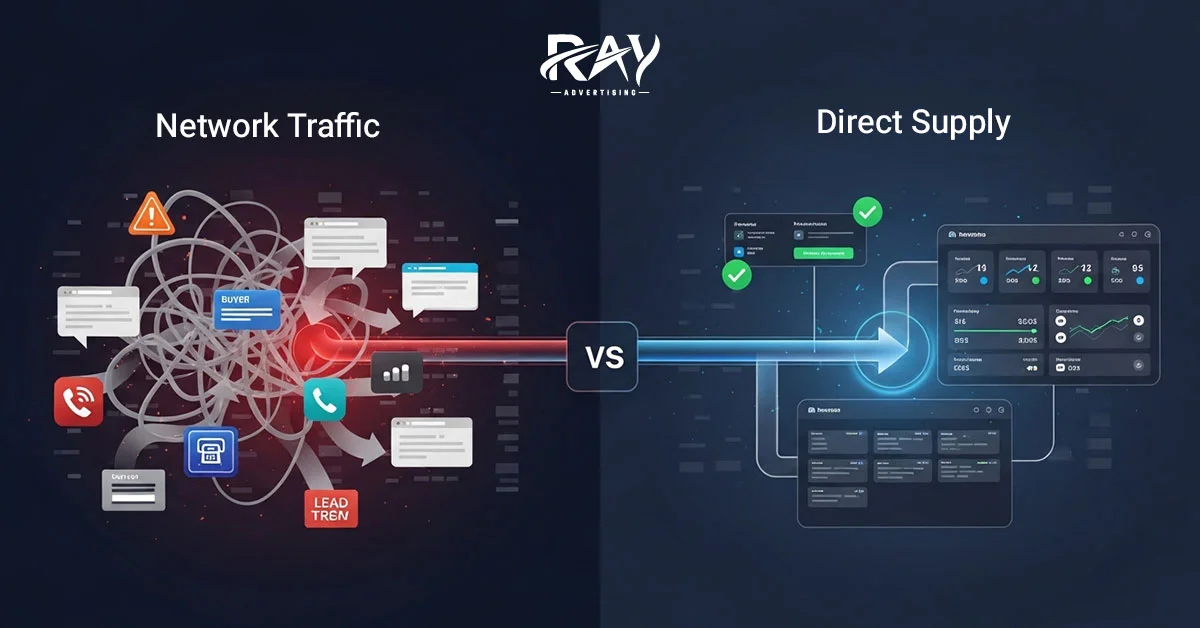
Many buyers never ask this question. They focus on price and volume. Then they expect strong results.
But something feels off.
The leads do not answer. The sales team keeps calling, but conversion stays low. Budget disappears faster than expected.
The problem is not always the lead itself. It is the source behind it.
In lead generation, where a lead comes from shapes everything. It affects quality, intent, compliance, and even your brand reputation.
This is why buyers need to understand the difference between direct supply and network traffic. One gives you speed but limited visibility. The other gives you control from the start.
If you do not control the source, you are guessing. And guessing is expensive.
What Network Traffic Really Means?
Think of network traffic like a giant marketplace.
The person you buy from did not find the leads themselves. They bought them from third-party sources.
When you buy this way, you sit at the end of a long chain. You do not choose the website where the lead first signed up. You just get the data. This makes it harder to know if the person really wants to talk to you.
In a network, the same lead is often sent to many buyers at once.
You may not be the only one calling. You may be competing with three or four other companies without even knowing it.
If you are not fast, you may lose the chance to connect.
Networks are good for getting many leads very quickly. They have a wide reach. Fast growth feels good. But fast growth without control can be risky.
You get volume, but you do not always know how the lead was made. It can feel like buying with a blindfold on.
The Risk of Not Controlling the Source
When you do not know the source, you are taking a gamble.
You cannot see how the lead was made. Did the person really want to talk to you? Or did they click a button by mistake? You have no way to be sure.
This leads to a few big problems:
- Quality goes up and down. One day, the leads are okay. The next day, they are terrible. It is like buying a box of pens where half do not work.
- The leads feel "tired." Sometimes these leads are recycled. The person has been called many times. They are frustrated before you even say hello.
- Your brand is at risk. Every lead must follow basic rules. If a third party breaks those rules, your company gets the blame. Your name is on the line.
- You make bad choices. Bad data messes up your plans. You might stop doing what works and start spending money on what does not work.
In the end, you cannot fix a problem you cannot see.
If you do not own the source, you are just waiting for something to go wrong. And waiting is not a good business strategy.
What Does Direct Supply Mean?
Direct supply is not a marketplace. It works differently.
Instead, leads are made and managed inside an in-house system. There are no middle platforms or outside partners.
Think of it like a farm that sells its own vegetables. They plant, grow, and harvest the food before selling it to you. Because they do all the work in-house, they know exactly what they are giving you.
When you use direct supply, you can see the full journey of a lead. You know the website where the person signed up, what they saw, and what they clicked. Everything stays under one roof.
This means nothing is hidden from you.
You are not buying leads from people you cannot trust or see clearly. You are buying from the team that actually made the lead. This gives you full visibility from start to finish.
How an In-House System Protects Quality
An in-house system works like a filter. It catches bad data before it reaches you. Because the system is owned, every lead is checked closely. Nothing is left to chance.
Here is how it maintains high quality:
Real-time checks: Every lead is verified the moment it is made. If the information looks wrong, the system stops it right away.
Owned sources: We do not depend on traffic from unknown third parties. The leads are generated on websites we own and control. This helps keep quality steady.
Fast fixes: If a problem shows up, it can be fixed quickly. There is no need to wait for a middleman. We can go directly to the source and fix problems quickly.
When you use an in-house system, you are not just getting a list of names.
You are getting leads that have already passed quality checks. It is a safer and more predictable way to grow your business.
Why Control Changes Your Results?
When you have control over your leads, your whole business feels the difference. It stops being a guessing game and starts being a plan.
Here is how it helps your team:
- No more wasted time. Your sales team stops chasing people who do not care. They spend their day talking to real people who actually want to buy. This keeps them happy and busy.
- Steady sales. Without control, your sales go up and down like a roller coaster. With direct supply, your results stay steady. You know what to expect every week.
- Better data. Because the data is clean, it is easy to see what works. You do not have to guess which ads are the best. The numbers tell a clear story.
- A plan you can trust. It is much easier to grow when you know how many leads will turn into sales. You can plan for the future without worrying about a sudden drop in quality.
In short, control makes business growth easier and safer. You stop reacting to problems and start leading your business.
Direct Supply vs. Network Traffic: Speed vs. Stability
Choosing between these two models depends on how you want your business to grow.
Network traffic is all about speed. You can get a large number of leads very quickly.
But this speed can be risky. Quality is not always clear. Your sales team may spend time calling people who are not interested. Fast lead volume does not help if it does not turn into sales. You may trade control for numbers that do not turn into sales.
Direct supply is about stability. It focuses on consistent results. You know exactly where every lead comes from and how it was made. Everything stays under control and works the same way every day.
Quick Comparison
|
Feature |
Network Traffic |
Direct Supply |
|
Lead Speed |
Very fast |
Steady |
|
Quality Control |
Limited |
High |
|
Source Visibility |
Low |
Full visibility |
|
Risk Level |
Higher |
Lower |
|
Business Stability |
Unpredictable |
More predictable |
Buyers must decide what matters more for long-term growth.
Do you want fast leads that may waste your money?
Or, do you want a steady stream of leads that you can actually trust?
For most companies, stability is the better choice. True speed comes from reaching the right people the first time.
When Direct Supply Is the Smarter Choice
Direct supply is a better choice for long-term business growth. It helps you build a business that can last. It also helps you sleep well at night, knowing your leads are good.
Here is when you should choose it:
✔ When your brand name matters. You worked hard to build your reputation. You do not want a bad lead source or a pushy middleman hurting it.
✔ When rules are strict. Some industries have very tough laws. With direct supply, you know every rule was followed. You do not have to worry about big fines.
✔ When you want steady results. You do not want your sales to feel like a surprise every morning. Direct supply keeps results steady, so you can stay on track.
✔ When you like planning. It is better to have a steady flow of sales than one big spike and then nothing. Predictable revenue is better for business growth.
In short, if you want control over your future, direct supply is a good choice. It removes guesswork from your business growth.
Final Takeaway: Control the Source, Control the Outcome
Both models can get you leads. But only one gives you full control over quality and results.
If you do not control the source, you are just reacting to problems. When you control the source, you can focus more on growing your business.
At Ray Advertising, we focus on direct supply systems. That means leads are generated and managed in our in-house system. There are no middle platforms or rented traffic sources. This helps keep lead quality, tracking, and verification more consistent.
When you work this way, you can get:
- Full visibility. You can see where your leads came from.
- Steady quality. You do not face large quality changes from batch to batch.
- Better brand safety. Quality checks and compliance stay under control.
You should not have to guess if leads will work. With Ray Advertising’s direct supply approach, you can focus on planning growth rather than managing uncertainty.
Control the source, and you can better control your results.
Recent Post
How Internal Dashboards Improve Lead Predictabilit...
May 18, 2026
From Network to Direct Supply: How We Control the ...
May 12, 2026
Why API Lead Delivery Outperforms CSV Faster, Clea...
May 4, 2026

Multi-Step QA Explained: How We Stop Bad Leads Bef...
April 25, 2026
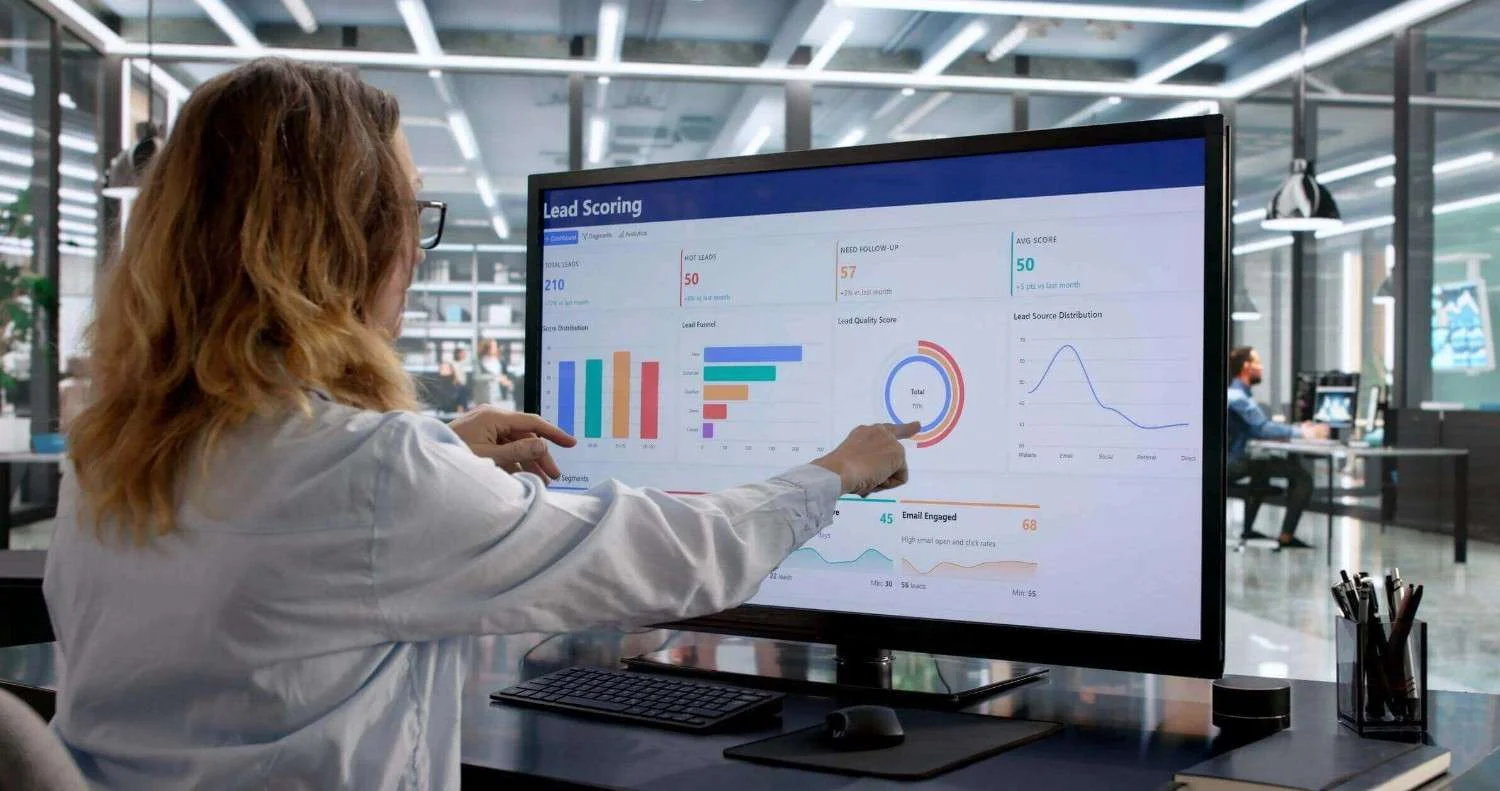
Duplicate Removal: Why Every Lead Counts Once...
April 23, 2026
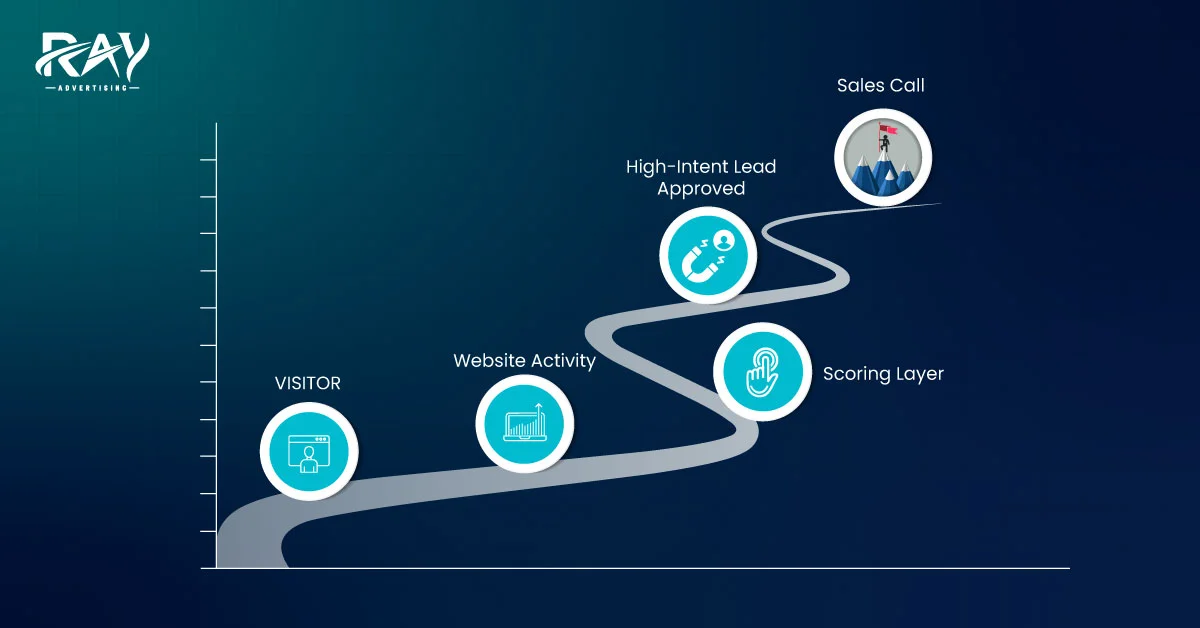
What Is a High-Intent Lead Definition, Signals & S...
April 13, 2026

The Hidden Cost of Non-Compliant Leads (And Why Ch...
April 20, 2026
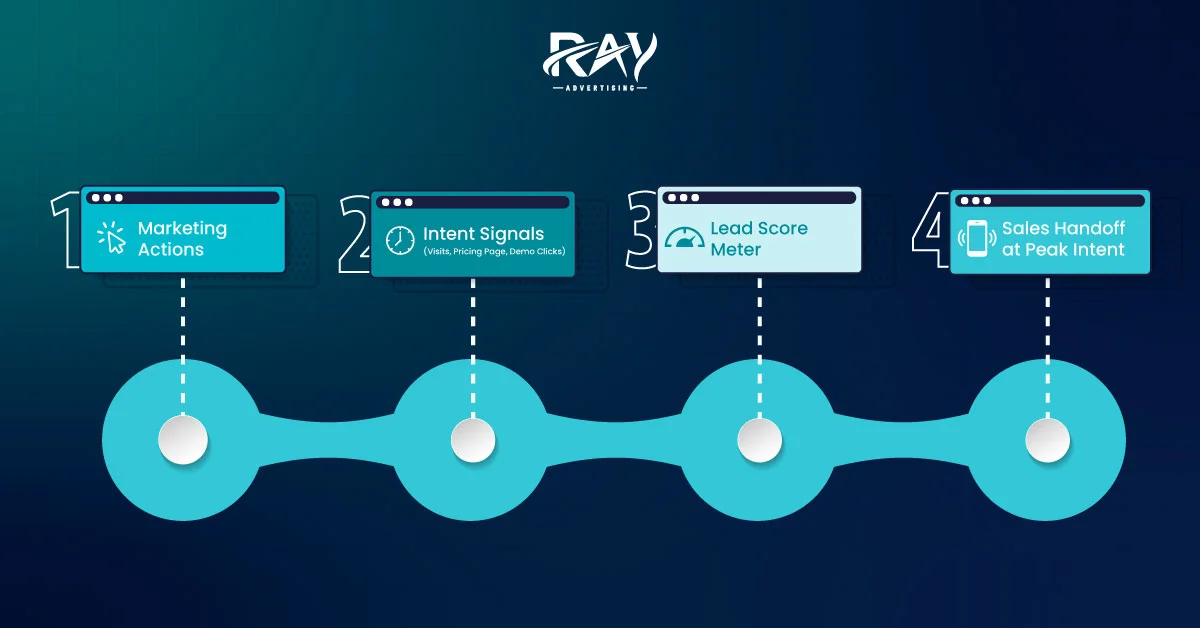
How We Maintain Lead Intent from First Click to Sa...
April 9, 2026
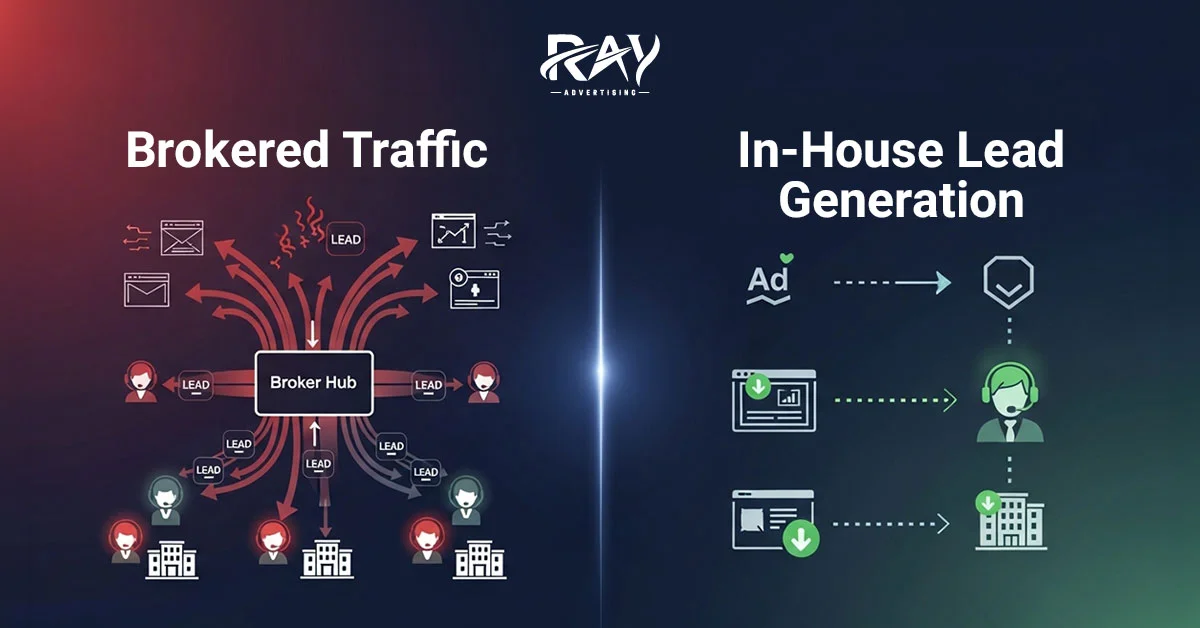
In-House Lead Generation vs Brokered Traffic...
April 1, 2026
Related resources
Explore the most relevant pages based on this article.
- Contact Ray Advertising — Ask about pricing, compliance, and launch timelines.
- Lead Generation — Lead scoring, duplicate removal, compliance screening, and delivery.
- Advertiser Solutions — Brand-safe performance marketing for measurable ROI.
- Pay Per Call — Qualified inbound calls with validation and tracking.
- Media Buying — Intent-driven traffic with tracking and controls.

FAQs
Quick answers related to this article.
A qualified lead meets your targeting rules (geo, intent, required fields) and passes duplicate and compliance filters.
We run suppression and matching checks in real time and can enforce recency windows and field-level matching rules.
Campaigns use approved creatives, consent-aware flows, and monitoring to flag and pause non-compliant sources.

