


Voice Search and Affiliate Marketing: What to Know
By Ray Advertising · Published January 29, 2026

Voice search is becoming a big part of how people find things online. As of 2025, about 20.5% of internet users worldwide use voice search. Many people now talk to their smartphones or smart speakers instead of typing. That makes searching faster and easier.
For affiliate marketers, this shift is important. People’s search habits are changing. That's why understanding the relationship between voice search and affiliate marketing is essential.
This article will show what voice search means for Affiliate Marketing. You’ll learn how to make your content voice-search friendly. Then see how to structure affiliate content for voice queries. Finally, find out how to measure success.
Why Voice Search Matters for Affiliate Marketers
Voice search is no longer a small trend. As of 2025, about one in five people worldwide use voice search.
A large group of potential customers now searches by speaking aloud. They look for products and information this way instead of typing.
Many use phones or smart assistants to ask questions. That matters for affiliate marketers. Because these people are often ready to buy, click, or research.
Voice users pick simple, direct, conversational questions. They might ask, “What is the best budget laptop for students?” instead of typing a few keywords. This works well for affiliate content. It provides advice and links to relevant products.
Additionally, voice search is often used on mobile devices or home assistants. As a result, affiliates can reach people during everyday moments. This includes when they are cooking, commuting, or shopping on their phone.
In short, voice search makes it easy for people to ask quick questions. When answers are clear and helpful, users are more likely to click and explore products. That can lead to more conversions and sales for affiliates.
How Voice Search Changes User Intent (Compared to Text Search)
People talk to voice assistants the same way they speak to another person.
Their queries are often full questions. For example: “What’s the best coffee shop near me open now?” instead of typing “best coffee shop near me.”
This means voice searches tend to be longer and more natural. They often include details like location, timing, or purpose.
With voice, many users expect fast, simple answers. They want quick answers without having to visit multiple pages.
People using voice search usually look for local or time-sensitive information. People ask for nearby services, product availability, or quick guidance.
In short, voice search shifts user intent. Instead of generic or broad searches, users are more likely to:
- Ask specific questions.
- Look for quick answers.
- Need nearby or timely results.
For affiliate content, focus on real questions your audience asks. Write in a natural, conversational way. Give clear, direct answers. Format your content so voice assistants and smart devices can read it easily.
Optimizing Affiliate Content for Voice Queries
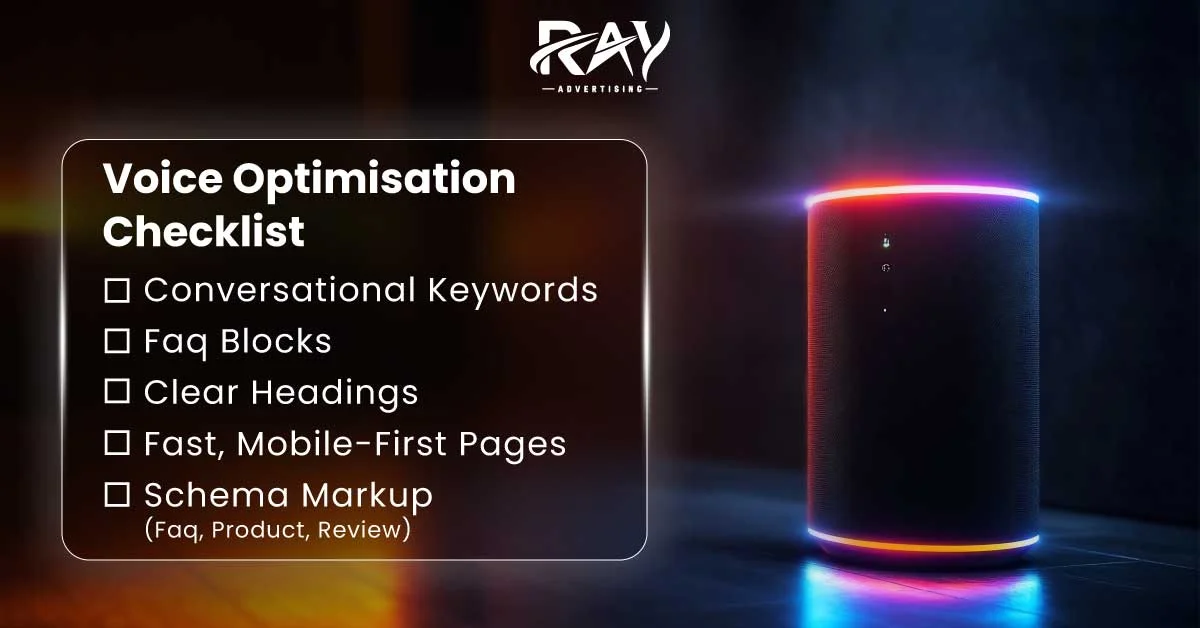
Voice search works differently from typed search. People speak full questions instead of short keywords. For example, someone might ask, “What is the best noise-cancelling headphone for travel?” instead of typing “travel headphones.”
To optimize affiliate content for voice queries, use:
- Conversational keywords: phrases people naturally say
- Short paragraphs and bullet points: make content easy for devices to read aloud
- Clear headings: help voice assistants identify answers quickly
- FAQ sections: answer common questions directly and include affiliate links naturally
- Mobile-friendly, fast-loading pages: slow pages can lose potential clicks. Many searches come from phones or smart devices.
Finally, review content regularly. Voice search trends change quickly. Update questions and answers to match what users are currently asking. This keeps your affiliate content visible and useful. It's also more likely to drive clicks and conversions.
Leveraging Schema Markup and Structured Data for Voice Optimization
Structured data is code added to your site. It helps search engines understand exactly what your page is about.
For voice search, this extra clarity matters. When someone asks a question out loud, a voice assistant must find a clear answer fast. Pages with proper schema are more likely to be chosen as the answer.
For affiliate content, use these schema types:
- FAQ schema: Use this if you answer common questions.
- HowTo schema: Use for guides or step-by-step tutorials.
- Product schema: Use when recommending products.
- Review schema: Use to highlight ratings and opinions about products.
- LocalBusiness schema: Use for businesses. It provides address, hours, and contact information that voice assistants can display accurately.
Also consider the Speakable schema. It marks which parts of your page a voice assistant should read aloud. This helps your content work well with smart speakers and voice devices.
Always make sure your structured data is valid. Tools like Google’s Rich Results Test can check for errors. A clean, correct schema gives you the best shot at appearing as a voice‑search answer.
Voice Commerce & Affiliate Opportunities
Voice commerce occurs when people use voice commands on devices. They use it to search for and purchase products. This trend is growing fast. The global voice shopping market is projected to total $62 billion in 2025. (capitaloneshopping.com)
Many shoppers use voice to find products quickly. Nearly half of U.S. consumers say they use voice when shopping.
As an affiliate marketer, this is a big opportunity. You can create content for voice shoppers, like:
- Product guides and comparisons
- Reviews and recommendations
- Simple “buy now” instructions
Voice users want fast, clear answers. Your content should be easy to read aloud. Keep language conversational. Add direct product links. Make pages load quickly and work on mobile and smart devices.
Local shopping is important too. Voice users often say “near me” when looking for products or services. Use local SEO and LocalBusiness markup to reach them.
Voice commerce is most effective for routine purchases. This includes groceries or small items. Create content that matches how people speak. This can turn voice searches into clicks and sales.
Technical SEO & Performance Considerations for Voice Search
Voice search works differently from typed search. Users expect fast, clear answers, usually on mobile devices. That means your site’s technical setup plays a big role in whether your content appears in voice results.
Here’s a table to focus on key areas of technical SEO for voice search. It shows what to do, why it matters, and provides useful tools to stay on track.
|
Focus Area |
What to Do |
Why It Matters |
Tools/Notes |
|
Page Speed |
Optimize images, scripts, and assets; use fast hosting |
Voice search users expect quick answers; slow pages hurt rankings and user experience |
Google PageSpeed Insights |
|
Mobile Performance |
Ensure responsive design; test on multiple devices |
Most voice searches come from phones or smart devices; mobile usability affects rankings |
Mobile-Friendly Test |
|
Site Structure & HTML |
Use logical headings and semantic HTML |
Helps search engines understand content quickly for voice queries |
- |
|
Internal Linking |
Connect FAQ or voice-optimized content to product pages or affiliate reviews. |
Guides users through content and boosts relevance/authority |
- |
|
Structured Data |
Audit FAQ, Product, Review, and LocalBusiness schema; fix errors |
Helps voice assistants pick the correct answers |
Google Rich Results Test |
|
Regular Audits |
Check page speed, mobile usability, and structured data periodically |
Keeps voice SEO healthy and improves clicks and conversions |
Schedule quarterly reviews |
Measuring Success of Voice Search Traffic & Affiliate Conversions
Tracking voice search traffic helps you understand what works and what doesn’t. Many analytics tools can show which users arrived via voice queries.
Key metrics to watch include:
- Traffic sources: See how many visitors come from voice search.
- Conversion rate: Track how many users click affiliate links or complete purchases.
- Click-through rate (CTR): Measures how many users click on your featured snippets or voice-optimized pages from search results.
- Bounce rate: Measures how many users leave your page quickly. A high bounce rate indicates your content is not fulfilling search intent.
Use tools such as Google Analytics and Google Search Console. They can help identify voice-driven pages and monitor performance over time.
For affiliate conversions, consider tracking:
- Which voice-optimized pages generate the most clicks?
- Which products or links are most popular among voice users?
Regular reporting helps you refine content, adjust keywords, and improve structured data. The goal is to make your affiliate pages easier for voice search to find. This also makes them more likely to convert visitors into sales.
Challenges & Best Practices for Voice-Optimized Affiliate Content
Voice search opens the door to extra opportunities, yet it comes with challenges.
High competition: Voice search often shows only a few results. Ranking is harder than on traditional search pages.
Balancing tone and SEO: Content should read naturally while remaining optimized. Avoid keyword stuffing, but strategically include important terms.
Keeping up with changes: It's important. Voice search algorithms, assistant behaviour, and user language evolve quickly. What works today may not work tomorrow. Regular updates are necessary.
Privacy and compliance: It matters the most. For local or location-based content, handle any user data transparently. Follow privacy rules to maintain trust.
Best practices:
- Write in a conversational, clear style.
- Answer questions directly and concisely.
- Use structured data such as FAQ, Product, Review, and LocalBusiness markup.
- Review your content regularly. Make sure information is accurate. Check that links work correctly. Ensure SEO elements are up to date.
Following these steps helps your voice-optimized affiliate content rank better. It provides value to users. It also generates more clicks and conversions.
Preparing for the Future, Trends & What’s Next
Voice search and AI are changing fast. Affiliate marketers who adapt early can stay competitive and reach a wider audience.
AI and smarter assistants
Voice assistants are becoming more accurate and context-aware. They understand natural language better. So they can answer questions in a more natural, conversational way.
Multimodal search
People no longer rely on just voice. They combine voice with pictures or videos to search. For example, they may ask a question while showing an image. Affiliate content may need to include images, video, and voice-optimized text together.
Personalized and local recommendations
Voice assistants increasingly provide recommendations based on user location, habits, or past searches. Affiliates can adapt to voice for local queries. They can also use it for personalized searches to reach a large users.
Voice-commerce growth
More users will buy directly through voice assistants. This means your affiliate strategy should support quick, easy, voice-friendly shopping.
What you should do
- Keep content conversational and easy for voice assistants to read aloud.
- Include images and video to complement voice answers.
- Update content regularly to stay aligned with AI and personalization trends.
- Focus on local searches and real-time recommendations.
Staying on top of these trends now will position your affiliate content. It can attract more voice-search traffic and boost conversions in the years ahead.
Maximizing Affiliate Success with Voice Search
Voice search is growing fast. People speak to find products and answers. Affiliates should use conversational keywords, short paragraphs, FAQs, and clear headings. Mobile-friendly pages and structured data help content get found. Voice commerce and local searches create new opportunities.
Agencies like Ray Advertising help affiliates optimize content and campaigns for voice search. Updating content and tracking performance keep pages effective. Acting now helps affiliates engage a larger audience and increase conversions.
Recent Post
How Internal Dashboards Improve Lead Predictabilit...
May 18, 2026
From Network to Direct Supply: How We Control the ...
May 12, 2026
Why API Lead Delivery Outperforms CSV Faster, Clea...
May 4, 2026

Multi-Step QA Explained: How We Stop Bad Leads Bef...
April 25, 2026

Duplicate Removal: Why Every Lead Counts Once...
April 23, 2026
What Is a High-Intent Lead Definition, Signals & S...
April 13, 2026

The Hidden Cost of Non-Compliant Leads (And Why Ch...
April 20, 2026
How We Maintain Lead Intent from First Click to Sa...
April 9, 2026
In-House Lead Generation vs Brokered Traffic...
April 1, 2026
Related resources
Explore the most relevant pages based on this article.
- Contact Ray Advertising — Ask about pricing, compliance, and launch timelines.
- Affiliate Network — How the network works, compliance, and publisher qualification.
- Publisher Program — Apply, get approved, and access vetted offers and tracking.
- Advertiser Solutions — For brands looking to launch performance offers with control.

FAQs
Quick answers related to this article.
Apply with your traffic sources and experience. We review compliance history, quality, and offer fit.
Allowed sources vary by offer and typically include compliant search, social, native, email, and display.
Payouts are set per offer and may be based on qualified leads or calls, with regular payment schedules for approved accounts.

