


Boosting Affiliate Marketing with Behavioral Targeting
By Ray Advertising · Published February 23, 2026
You can get steady traffic and still struggle to make affiliate sales. People visit your site, scroll pages, and click links. But sales do not come as you expect. This usually happens because the offers shown do not match what the visitor wants at that moment.
Behavioral targeting can fix this problem. It uses simple actions to guide what offers people see. This includes the pages visited, time spent on each page, and links clicked. When affiliates use this data, they can match offers to actual intent instead of guessing.
This article explains how behavioral targeting works in affiliate marketing. It shows why it matters for affiliates. You will also learn how you can use it to improve conversions without chasing more traffic.
Why Behavioral Targeting Matters for Affiliate Marketing
Generic offers often fail because they do not match what visitors want. Showing the same offer to everyone can get clicks, but not sales.
Behavioral targeting matters a lot. Because it helps affiliates show the right offer at the right time. For example, a visitor who spends more time on a product page is more likely to purchase. Someone who scrolls quickly is less likely to buy.
Using behavior to guide offers also saves time and effort. Instead of guessing, affiliates can focus on visitors who are more likely to convert. This makes campaigns more effective and improves earnings.
What Is Behavioral Targeting
Behavioral targeting is a method to show offers based on the actions visitors take on a website. It does not rely on guesses. Instead, it uses real behavior to decide what might interest them.
For example, a visitor reads several articles about running shoes. The affiliate site can then suggest shoe deals or related gear. This makes it more likely they will buy something they are interested in.
How Behavioral Targeting Boosts Affiliate Performance
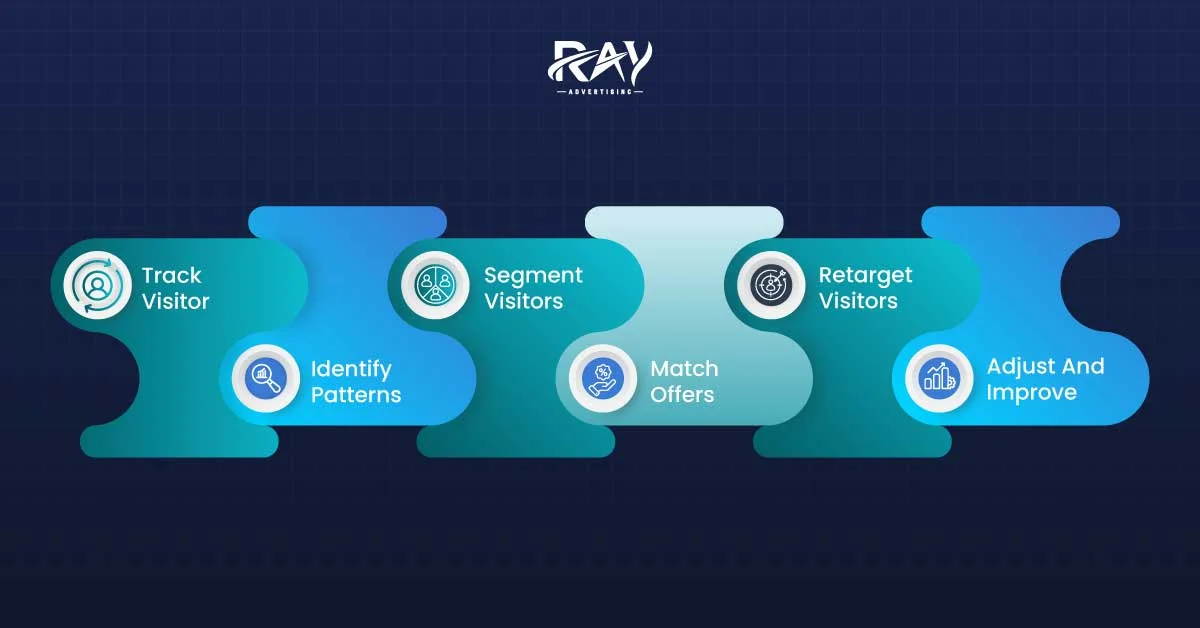
Behavioral targeting works by using visitor actions to guide which offers they see. Here’s the process:
- Track visitor actions: Monitor the pages visitors view. Track the links they click and the time they spend.
- Identify patterns: Look for behavior that shows interest. For example, repeated visits to a product page or time spent comparing items.
- Segment visitors: Group visitors based on their actions. For example, ‘interested buyers’ or ‘just browsing.’
- Match offers: Show offers that match each group’s interest. Also, match their stage in the buying process.
- Retarget visitors: Remind visitors who didn’t buy. Use personalized offers to bring them back.
- Adjust and improve: Use the results of each campaign to refine which offers to show and when.
Following this process helps affiliates show the right offer at the right time. It makes campaigns more effective, boosts sales, and reduces wasted effort.
Key Behavioral Data Affiliates Can Use
Affiliate marketers can use simple visitor actions to learn what someone might want. This helps show better offers.
|
Behavioral Data |
What It Shows |
|
Pages visited |
Shows what topics interest a visitor. Visiting many product pages can mean they are closer to buying. |
|
Time spent on pages |
A longer time on a page usually means more interest in that topic. |
|
Links clicked |
Shows what the visitor wants next. Clicking on details or comparisons often means higher interest. |
|
Repeat visits |
Returning to a site multiple times can signal a stronger intent to purchase. |
|
Search terms used |
Shows exactly what the visitor is looking for. Helps match the right offers. |
These simple actions do not need complex tools. Even basic tracking tools can show this data. Affiliates can then use it to match offers to real interest and boost sales.
Best Practices for Using Behavioral Targeting in Affiliate Campaigns
Behavioral targeting performs well when applied carefully and thoughtfully. Following simple rules can improve results and build trust. It also helps avoid mistakes. These best practices make affiliate campaigns more effective and safe.
- Respect privacy: Show visitors what data you collect and why. Let them choose.
- Use the right data: Track useful actions like pages visited, clicks, and past purchases.
- Group visitors: Segment by behavior, like frequent browsers or first-time visitors.
- Avoid overdoing it: Don’t show the same offer too many times.
- Use first-party data: Collect data directly from your site for more accurate targeting.
- Test and improve: Try different offers and messages, then adjust based on results.
- Follow the rules: Comply with privacy laws like GDPR and CCPA.
Examples of Behavioral Targeting in Affiliate Marketing
Behavioral targeting shows the right offers to the right visitors at the right time. Affiliates use visitor actions to choose which products or deals to show. They don’t have to guess what will sell. Here are a few simple examples that show how behavior can lead to better offers and more sales.
Example 1: Cart Abandonment
- Behavior: A visitor adds a product to the cart but leaves the site without buying.
- Offer: The affiliate shows ads or emails for that product later to remind them.
- Result: The visitor returns to the product and makes a purchase.
Example 2: Product Interest
- Behavior: A visitor looks at hiking boots and spends time on the product page.
- Offer: The affiliate shows ads or emails for the boots or related gear.
- Result: The visitor clicks the offer and makes a purchase.
Example 3: Repeat Visits
- Behavior: A visitor returns to a blog several times and reads reviews about fitness gear.
- Offer: The affiliate shows offers for top fitness products and deals.
- Result: The visitor buys a product they are interested in.
Behavioral Targeting Tools for Affiliates
Affiliates need tools to show the right offers to the right visitors. Behavioral targeting tools track visitor actions. They use this information to show relevant ads, emails, or content. These tools make campaigns smarter and can boost sales without more traffic.
Here are some behavioral targeting tools for affiliates—
- Mailchimp – Shows the right offer to each visitor based on their actions.
- Trackier – Helps affiliates see which actions lead to sales.
- Google Ads – Shows ads to visitors based on their past behavior.
- Facebook Pixel – Retargets visitors with ads on Facebook based on their site activity.
- HubSpot – Personalizes emails and website content based on visitor actions.
Compliance and Privacy Considerations
When affiliates use behavioral targeting, they must be careful with visitor data. Many laws worldwide set strict rules for handling personal information.
Visitors must be aware of what data you collect and how it is used. You should have a clear privacy policy that explains this in easy words. You also need consent before you collect tracking data, such as cookies. This is required in places like the European Union under GDPR. Users also have control over accessing or deleting their data.
In the United States, the California Consumer Privacy Act (CCPA) protects users. They allow users to know what data is collected. They also allow users to opt out of data selling. Affiliates should ensure their sites offer users these options.
When you collect data, only collect what is necessary. Do not store extra data longer than needed. Keep data safe from theft or leaks. This helps protect your users and builds trust.
You also need to follow general affiliate rules. For example, disclose that you may earn a commission when someone uses your links. This transparency helps users understand your relationship with the products you promote.
In short, be transparent and request consent. Protect the data you collect and stick to privacy laws. This ensures your behavioral targeting is fair and lawful.
The Future of Behavioral Targeting in Affiliate Marketing
Behavioral targeting is changing fast in affiliate marketing. The focus will shift to smarter, more privacy-friendly methods to engage visitors. Affiliates will need to adapt to changing technology and new rules. They must also keep offers relevant and trustworthy.
- AI predictions: Advanced tools can predict what visitors will do. They forecast interests and actions before they happen.
- Privacy-first approach: Compliance with data laws will become even more crucial.
- Smarter personalization: Affiliates will tailor offers safely and ethically without invading privacy.
Affiliates who adopt these trends can stay ahead and continue to earn trust. They can also turn visitor behavior into steady conversions.
Turning Behavior Into Conversions
Turning behavior into sales means using what visitors do on a site. Watching clicks, pages visited, and what they look at shows what they like. Affiliates can use this to show offers that fit those likes.
Showing the right offer at the right time helps visitors buy. Behavioral targeting uses real actions, not guesses. These actions help turn interest into sales. It also makes campaigns work better
Recent Post

How to Scale Lead Generation Without Losing Qualit...
August 17, 2026

Improve Lead Generation Quality Without Losing Vol...
August 16, 2026

Reduce Cost Per Acquisition: 12 Tactics That Work...
August 14, 2026
Reduce Cost Per Acquisition: 12 Tactics That Work...
August 13, 2026

Car Insurance Leads for Agents: Best Sources and S...
August 12, 2026
What Are SR22 Insurance Leads and Why Are They So ...
August 11, 2026

Auto Insurance Pay Per Call: How It Works and Why ...
August 10, 2026

How to Buy Auto Insurance Leads That Actually Conv...
August 9, 2026

High Risk Auto Insurance Leads: How to Target and ...
August 8, 2026
Related resources
Explore the most relevant pages based on this article.
- Contact Ray Advertising — Ask about pricing, compliance, and launch timelines.
- Media Buying — Native, search, social, and owned-and-operated traffic for performance.
- Lead Generation — Exclusive vs shared leads, API delivery, and lead scoring.
- Pay Per Call — Scale inbound calls with real-time routing and qualification.
- Advertiser Solutions — Brand-safe growth with reporting and quality controls.

FAQs
Quick answers related to this article.
Common channels include native, search, social, email, display, and retargeting—based on offer and compliance requirements.
Yes. We can support testing and optimization so messaging matches audience intent and improves conversion.
We use source attribution, performance reporting, and quality signals to scale winners and pause underperformers.

