


How to Use Podcasting for Affiliate Marketing in 2025
By Ray Advertising · Published January 29, 2026

More people than ever are listening to podcasts. In 2025, more than 584 million people worldwide listened to podcasts. That makes podcasts a powerful place to share ideas and to earn as an affiliate.
A podcast allows you to talk directly to listeners. They hear your voice. They hear your story. That builds trust. When you recommend something your audience might like, that trust can lead to clicks or sales.
In this guide, you’ll learn how to use podcasting for affiliate marketing step‑by‑step. We start with the basics: why podcasting works for affiliates. Then we move through planning, content creation, promotion, tracking, and long‑term growth.
By the end, you’ll have a clear path to grow a podcast and turn it into a steady income stream.
Step 1: Understand the Opportunity
Why Podcasts Are a Goldmine for Affiliates in 2025
Podcast audiences are growing fast. In 2025, around 158 million people in the U.S. listened to podcasts monthly (PodcastStatistics). People spend time with their favorite shows, often during commutes or while doing chores. This gives hosts a chance to recommend products.
Listeners trust their favorite hosts. A host’s personal recommendation can influence buying decisions more than a banner ad or email (Emarketing). Podcasts also allow you to explain products in detail and tell stories about them. That is harder to do in other channels, such as social media or email.
Compared to blogs, social media, or YouTube videos, podcasts feel more personal. Listeners focus on the host’s voice. They feel a connection to the host. This makes affiliate promotions more effective.
Choosing the Right Niche & Audience
Select a niche that matches your interests and expertise. Your niche should also have products people want to buy.
For example:
- Tech podcasts work well with software and gadgets.
- Health podcasts work well with supplements and fitness gear.
Next, understand your audience. What are their goals, needs, and challenges? The better you know them, the easier it is to promote products they will actually use.
Balance is key. A wide-ranging niche may attract many listeners, but affiliate conversions can be low. A very narrow niche may limit audience growth. So, find a sweet spot where the audience is engaged and interested in your products.
Step 2: Plan & Prepare Your Affiliate Strategy
Selecting Profitable Affiliate Programs for Podcasts
First, check how the affiliate program pays. Some programs give a one‑time commission for each sale. Others pay recurring commissions as long as the customer stays subscribed. Recurring programs work well for subscription services.
Select products or services that match your audience’s needs and interests. If your podcast is about writing, recommend tools like Grammarly or ProWritingAid. If it is about fitness, recommend apps like MyFitnessPal. Listeners are more likely to trust and use products that match their interests.
For podcasts in 2025, some notable affiliate programs include:
- Amazon Associates – Wide range of products; good for physical items or books relevant to your audience.
- ConvertKit – Email marketing platform; recurring commissions for subscriptions.
- Bluehost – Web hosting; high one-time commissions per sign-up.
- Fiverr – Online services marketplace; affiliate payouts per purchase.
- Skillshare – Online courses; recurring or per-sign-up commissions.
- Teachable – Online course platform; recurring commissions for subscription-based plans.
Also, think about long-term value. Recurring commissions can build a steady income over time. A one-time commission might feel good now, but it ends there. Choose based on what your audience needs.
Compliance & Best Practices
Be honest. When you use affiliate links, tell your listeners. You can say something like: “If you buy using my link, I may earn a small reward.” This builds trust. It also meets important rules.
Include the affiliate disclosure at the start, before you mention the product or service. Don’t hide it at the bottom of the page or after many sentences. Make it easy to see.
Never exaggerate what the product can do. Offer honest opinions only. If something is good, say why. If you don’t like it, say that too. That keeps your credibility strong.
Step 3: Create Content & Integrate Affiliate Promotions
Integrate Affiliate Offers in a Natural Way
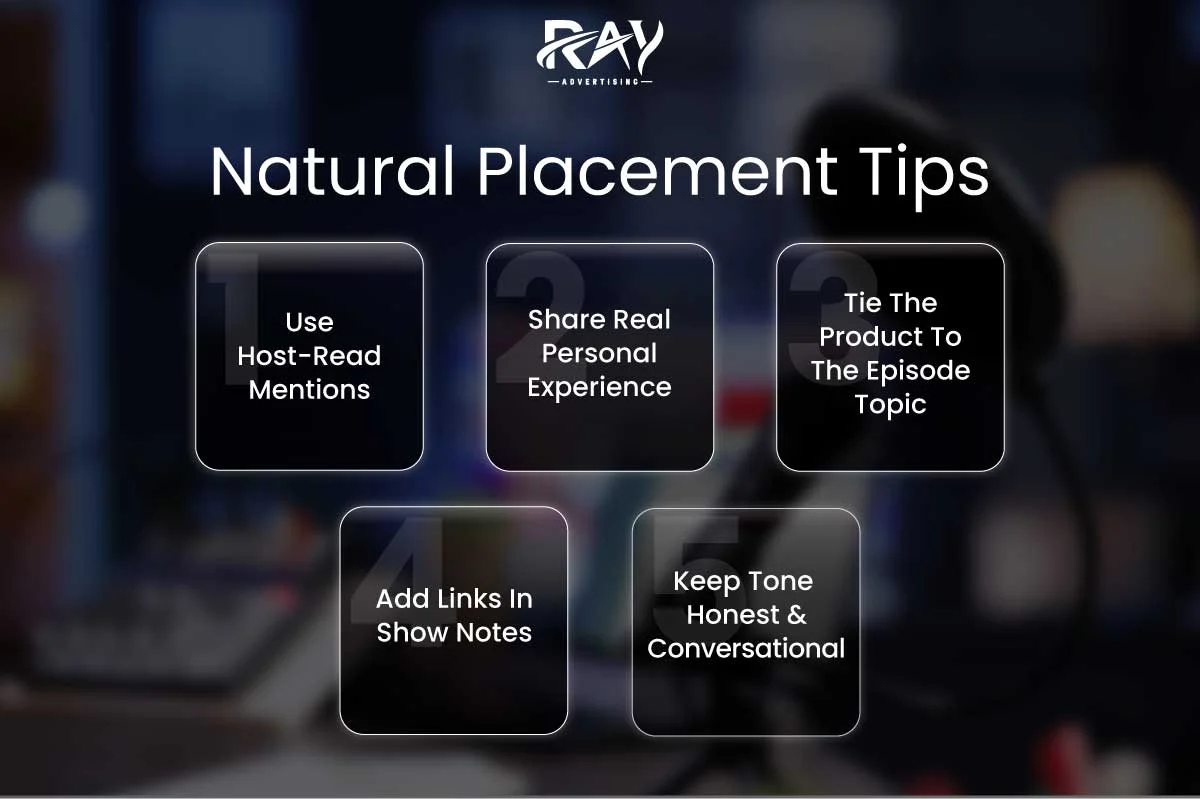
Use your own voice to mention products or services. That means you, the host, talk about them. This works better than playing a pre‑recorded ad. Host‑read promotions feel real and personal.
Weave the mention into your show’s story. Share a brief story about your own experience using the product. Or mention it when it fits with the topic you discuss. This helps the mention feel part of the episode. Listeners pay attention.
Keep promotions true to your podcast’s tone and style. Don’t force an ad where it feels wrong. Stick to topics your audience cares about. This keeps your show honest and builds trust over time.
Create Useful and Engaging Podcast Content
Plan each episode to provide real value first. Then add affiliate mentions when it makes sense. This way, listeners get good content, not just ads.
Include show notes or episode descriptions. Put the affiliate link there. Some listeners prefer to click the links first and consider the purchase later, rather than making an instant decision.
Whenever possible, turn your podcast content into other formats. Write a blog post summarizing the episode. Share a short clip on social media. Or send highlights to your email list. This increases exposure and gives your affiliate links a better chance of being clicked and used.
Step 4: Promote Your Podcast & Affiliate Offers
Use Smart Promotion for Affiliate Products
Use listener‑friendly calls to action. Clearly instruct your listeners on what to do. For example:
“Check the link in the show notes if you want to try this tool.”
Invite guests or collaborators sometimes. A guest with their own followers can help you reach new ears. Let the guest share the episode too. That helps expand your reach.
Drive Traffic to Your Podcast
You have two main promotion styles: organic and paid.
Organic promotion:
- Share episodes on social media. Post short clips, quotes, or audiograms (short audio snippets with visuals).
- Use SEO where you can. Write good descriptions or show notes. Use clear titles so people can find you through search.
- Engage in communities. Join groups or forums related to your podcast topic. Share ideas, not just promos. That builds genuine interest.
- Build an email list. Emailing new episodes or bonus content helps you connect directly to your listeners; you “own” the contact, not an algorithm.
Paid promotion (if you have a budget):
- Run ads on social media or on podcast platforms to reach people who don’t know you yet.
- Boost only your best episodes or most relevant ones. This helps maximize the effect and avoid wasting budget.
Use Tech Tools and Smart Workflows
Automate content repurposing. Turn each episode into a blog post, social media snippet, email summary, or audiogram. This maximizes the impact of every episode. Useful tools include:
- Descript – edit audio and create clips
- Canva – design visuals and audiograms
- Headliner – create short audio-video clips
Optimize for search and discoverability. Add clear show notes and transcripts when possible. This makes it easier for new listeners to find your podcast beyond the platform. Use platforms like:
- Buzzsprout – metadata and SEO support
- Anchor – episode optimization for better visibility
Track affiliate performance. Monitor which episodes or links drive clicks and conversions using:
- ClickMeter – link tracking and reporting
- ThirstyAffiliates – manage and track affiliate links
- Podtrac – track episode-level performance
Using these tools helps you save time, reach new listeners, and focus on strategies that actually drive results.
Step 5: Track, Measure & Optimize
After publishing your episodes, track their performance to see how listeners engage and respond. Focus on results and improvements rather than tools.
- Check listener behavior. See which episodes get the most plays and how long people listen.
- Track which links generate clicks and sales to measure affiliate success. Look at patterns over time.
- Analyze episode-level performance. Identify which topics, formats, or mentions drive the most engagement and conversions.
Adjust your strategy based on what you learn. Create more episodes like the high-performing ones. Change or remove promotions that don’t convert. Refine your calls-to-action and affiliate offers to improve results.
This step ensures you use data to grow your podcast and affiliate income over time.
Step 6: Scale & Achieve Long‑Term Affiliate Success
Maintain honesty and usefulness as your podcast grows. Deliver affiliate promotions naturally and authentically. Listeners will stick around if they trust you.
Combine affiliate marketing with other income streams. For example: sponsorships, premium content, or listener support. This gives you more income and less risk if one source slows down.
Stay aware of new podcast trends and tools. Experiment with new formats and content to see what resonates with your audience. Adapt as technology and listener preferences evolve.
Always prioritize your listeners. Deliver value consistently. Keep trust and honesty at the center of your strategy. That’s how you build long‑term success and maintain steady affiliate income.
Grow Your Podcast and Earn with Affiliate Marketing
Podcasting is a powerful way to connect with listeners and earn affiliate income. Choose a niche your audience cares about. Recommend products they can trust. Track results to see what works.
For expert guidance and measurable growth, Ray Advertising can help you grow your podcast and turn listener engagement into real income. Start building your affiliate strategy with them today.
Sources:
https://www.emarketer.com/content/podcast-hosts-outpace-influencers-celebrities-consumer-influenc
Recent Post
How Internal Dashboards Improve Lead Predictabilit...
May 18, 2026
From Network to Direct Supply: How We Control the ...
May 12, 2026
Why API Lead Delivery Outperforms CSV Faster, Clea...
May 4, 2026

Multi-Step QA Explained: How We Stop Bad Leads Bef...
April 25, 2026

Duplicate Removal: Why Every Lead Counts Once...
April 23, 2026
What Is a High-Intent Lead Definition, Signals & S...
April 13, 2026

The Hidden Cost of Non-Compliant Leads (And Why Ch...
April 20, 2026
How We Maintain Lead Intent from First Click to Sa...
April 9, 2026
In-House Lead Generation vs Brokered Traffic...
April 1, 2026
Related resources
Explore the most relevant pages based on this article.
- Contact Ray Advertising — Ask about pricing, compliance, and launch timelines.
- Affiliate Network — How the network works, compliance, and publisher qualification.
- Publisher Program — Apply, get approved, and access vetted offers and tracking.
- Advertiser Solutions — For brands looking to launch performance offers with control.

FAQs
Quick answers related to this article.
Apply with your traffic sources and experience. We review compliance history, quality, and offer fit.
Allowed sources vary by offer and typically include compliant search, social, native, email, and display.
Payouts are set per offer and may be based on qualified leads or calls, with regular payment schedules for approved accounts.

