


Why Real-Time Auto Insurance Leads Close More Policies
By Ray Advertising · Published August 5, 2026
Why Real-Time Auto Insurance Leads Close More Policies
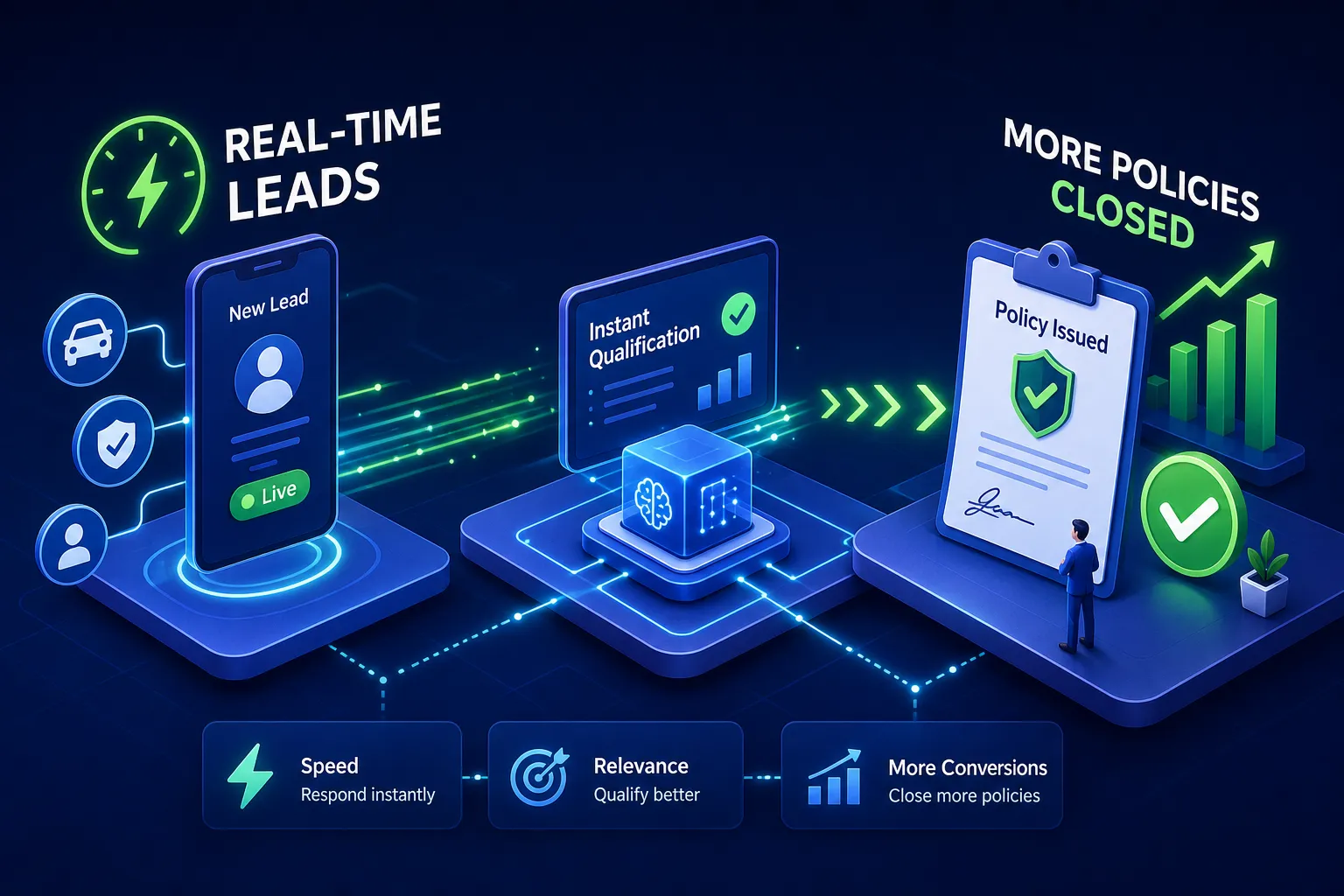
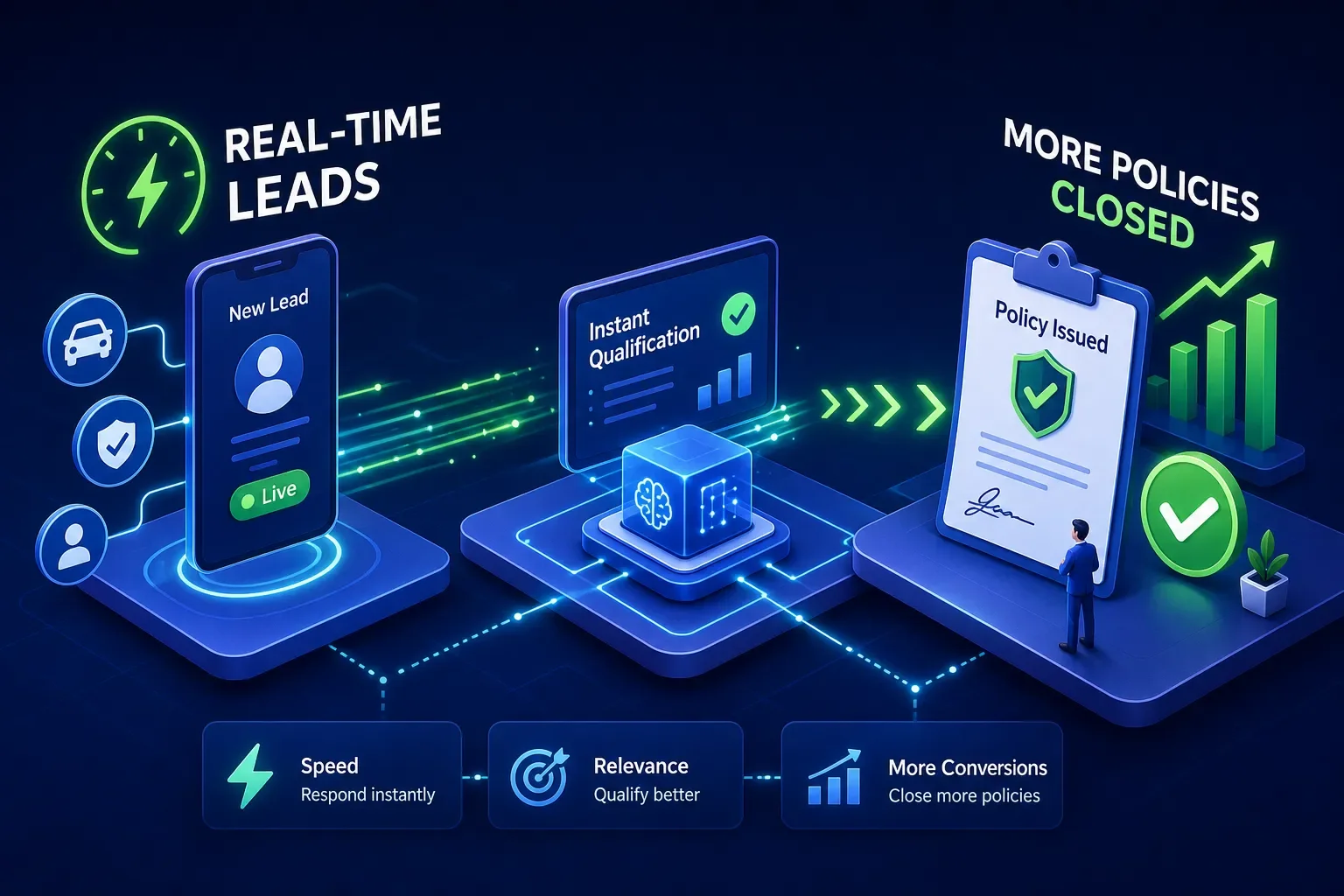
Real-time auto insurance leads convert at significantly higher rates than delayed alternatives, and the reason comes down to one number: 5 minutes. Agents who contact a lead within that window are roughly 21 times more likely to qualify the prospect than agents who wait 30 minutes, according to research replicated across industries. In auto insurance, where consumers open multiple browser tabs and submit quote requests to several carriers at once, the decay is even faster. By the time a 30-minute window passes, many shoppers have already taken a call from a competitor, received a quote, or simply moved on.
Most agencies don't lose money on leads because the leads are low quality. They lose money because the window between consumer intent and agent outreach is too wide. A prospect who submits a quote request is in an active buying mindset for a narrow, measurable window, and every minute of delay shrinks it. Instant auto insurance leads exist specifically to close that gap, and the agencies that treat delivery speed as a core business variable consistently outperform those that don't, on contact rate, conversion rate, and cost per bound policy.
This article covers the data behind speed-to-contact, the delivery methods that actually qualify as real-time, the financial case for exclusive versus shared leads, what separates a trustworthy vendor from the rest, the compliance documentation you need before dialing a single number, and the follow-up process that turns fast delivery into closed policies. The 5-minute delivery standard is the benchmark worth measuring every vendor against, because agencies that consistently hit that window produce measurably better outcomes than those operating on hourly batches or email notifications.
The First 5 Minutes After a Quote Request Decide More Than You Think
When a consumer fills out an online quote form, they're not passively waiting for someone to call them back. They're actively shopping, often with multiple tabs open and multiple forms submitted. The intent signal is strongest the moment they hit submit, and it weakens with every passing minute as quotes arrive from faster competitors.
Why Consumer Intent Decays So Fast
Online quote shopping is not a considered, single-vendor process for most consumers. They search, compare, and submit to several insurers at once, then evaluate whoever responds first with the clearest value proposition. Based on the same speed-to-contact benchmarks that document the 21x qualification gap, contact rate roughly halves every 5 minutes after submission. A lead that might have converted at a 65% contact rate at the 5-minute mark is performing at a fraction of that by the 30-minute mark. The prospect hasn't changed, your timing has.
What the Data Says About Speed-to-Contact
The benchmark research is clear: contacting a lead within 5 minutes produces qualification rates approximately 21 times higher than waiting 30 minutes. Translated to real numbers, agencies receiving exclusive real-time auto insurance leads achieve contact rates of 55, 70% with a 5-minute delivery window, compared to 35, 50% for shared leads delivered with significant delay. That contact rate gap directly multiplies conversion rate. Delivery speed is not a convenience feature, it's a revenue variable with a calculable dollar value.
The Hidden Cost of Slow Lead Delivery
If your agency is buying leads at $30, $60 each but only reaching 35% of prospects because delivery is batched or routed through email, your effective cost per contact is $85, $170 before a single policy conversation happens. Run that math against a faster pipeline with a 65% contact rate and the same $40 lead, and your cost per contact drops to about $62. The math favors fast delivery even when the CPL is slightly higher, because more of the leads you buy actually become conversations.
What "Real-Time" Lead Delivery Actually Means in Practice
Many agencies believe they're receiving live, fresh car insurance leads when they're actually getting hourly batches, delayed emails, or recycled aggregator data. The term "real-time" gets applied loosely by vendors, so understanding the delivery mechanics helps you evaluate what you're actually buying.
API and Webhook Delivery: The Technical Baseline for Real-Time Auto Insurance Leads
True real-time delivery happens through a push-based API or webhook that fires the moment a lead is verified and submitted. The record routes directly into your CRM or dialer, with latency measured in seconds rather than minutes. This is the most reliable delivery architecture for making a sub-5-minute contact window consistently achievable at scale. Systems that rely on polling or scheduled pulls introduce delays that compound over time, particularly during high-volume periods.
Live Transfer and Call Connect: The Highest-Intent Option
Live transfer leads represent the premium tier of real-time delivery: the consumer is connected directly to an agent while still on the phone, eliminating outreach delay entirely. This format works best for agencies with staffed call centers that can handle transfers during business hours. Pricing reflects the higher intent level, typically ranging from $25, $60 for standard auto transfers to $80, $150 for premium segments. Web leads delivered via API are more scalable for most independent agencies, while live transfers make sense for higher-volume operations with consistent agent availability.
Why Email-Only Delivery Is Not Real-Time
Email delivery introduces unpredictable latency that depends entirely on how often the receiving agent monitors their inbox. An agent checking email every 20, 30 minutes is functionally receiving stale leads even if the vendor technically delivered them within seconds of submission. Real-time delivery must feed directly into a system that triggers an immediate action, an automated dialer, a CRM workflow, or a click-to-call prompt. Email notifications as the primary delivery channel are incompatible with a 5-minute contact window.
Exclusive vs. Shared Leads: The Conversion Math Every Agency Should Run
The price per lead is not the right metric for evaluating lead type. The right metric is cost per bound policy, and the math often surprises agencies that default to shared leads on the assumption that lower CPL means better economics.
Benchmark Conversion Rates by Lead Type
Exclusive real-time auto insurance leads convert at approximately 8, 15% to bound policy, with contact rates around 55, 70%. Shared leads convert at roughly 4, 8% with contact rates around 35, 50%. The gap exists because exclusive leads reach one buyer, while shared leads land with multiple agencies simultaneously, guaranteeing a race to contact and a higher rate of already-spoken-to prospects when you do get through.
Running the Cost-Per-Bound-Policy Calculation
Take a concrete example. Exclusive leads priced at $45 each with a 10% conversion rate produce a cost per bound policy of $450. Shared leads priced at $20 each with a 5% conversion rate produce a cost per bound policy of $400. That's a $50 difference per policy, but the exclusive lead came with a single buyer, no contact competition, and a higher-intent conversation.
With average first-year auto commissions running 10, 15% on a $2,000 premium, each bound policy generates roughly $200, $300. At those economics, the cost-per-policy spread between lead types is narrow, but the experience and scalability of working exclusive leads consistently pulls ahead over time.
When Shared Leads Still Make Financial Sense
Shared leads remain viable for agencies with high-volume, aggressive follow-up infrastructure and lower average premiums, where the economics of competing for the same lead are acceptable. The key condition is speed: if your system can deliver a call attempt within 2, 3 minutes of receiving a shared lead, you're competing effectively. Without that infrastructure, shared leads become expensive at the effective cost-per-contact level, regardless of the lower sticker price per lead.
How Real-Time Auto Insurance Leads Improve Conversion, and How to Choose the Right Vendor
Vendor selection determines the ceiling of your campaign performance. Delivery speed, exclusivity, quality guarantees, and pricing transparency each affect ROI differently, and not every vendor treats all four with equal rigor. Evaluate any vendor against these dimensions before committing budget.
Ray Advertising's 5-Minute Delivery Standard and What It Means for Agents
At Ray Advertising, exclusive auto insurance leads are delivered within 5 minutes of verified submission through a direct API connection, a concrete benchmark for what real-time delivery should mean in practice. That exclusive-only model means no contact competition, no race to be first among four other buyers, and a consumer who hasn't already fielded three calls before yours arrives. A lead that belongs to one buyer and arrives before the consumer has moved on is a fundamentally different product from a shared lead arriving 45 minutes after submission, even if both show up on a spreadsheet in the same "auto insurance leads" category.
Quality Guarantees, Refund Policies, and What to Expect
Leading vendors offer return windows of 14, 25 days with credits for clearly defective leads: wrong numbers, duplicates, out-of-area contacts, and submissions with no quote intent. The industry standard is account credits, not cash refunds, so factor that into your cash flow planning. QuoteWizard, EverQuote, and SmartFinancial each offer documented return policies in this range, verify the exact terms with each vendor's published policy before signing. Before committing to any vendor, request the written quality guarantee, the eligible defect categories, and the timeline for credit processing.
Pricing Ranges and How to Evaluate Value
In 2026, shared real-time web leads for auto insurance run approximately $15, $45 depending on the source and exclusivity structure. Exclusive real-time leads range from $25, $60, and live transfers for auto coverage run $25, $60 for standard products and $80, $150 for premium or high-intent segments. The comparison metric that matters is cost per bound policy, not cost per lead. A $55 exclusive lead with a 12% conversion rate outperforms a $22 shared lead with a 5% conversion rate both mathematically and operationally.
Compliance Requirements to Verify Before You Contact a Single Lead
Speed without compliance creates legal exposure that erases the economics of any lead campaign. TCPA violations carry statutory damages of $500, $1,500 per call, and auto insurance is a high-volume, high-contact industry where those numbers accumulate quickly. Verify these requirements before your first dial.
TCPA One-to-One Consent: What It Means for Your Agency
The FCC adopted a one-to-one consent rule requiring that consumer consent specifically name the seller contacting them, rather than authorizing a bundled list of buyers through a shared opt-in form. That rule was subsequently vacated by the Eleventh Circuit in Insurance Marketing Coalition v. FCC. However, the named-seller standard remains the strictest version of TCPA risk management and the compliance posture that best protects agencies from exposure, regardless of the rule's current legal status. Bundled consent forms that authorize contact by unnamed "insurance partners" carry more risk than vendor forms that name specific buyers. Confirm that your vendor's opt-in language meets or approximates a named-seller standard before purchasing.
What Documentation to Request From Your Lead Vendor
Before buying, request the exact consent language shown to the consumer at the time of submission, along with the timestamp, IP address, source URL, and stored proof-of-consent metadata. These records are your primary defense in a TCPA dispute. Retain them for a minimum of five years in a searchable, audit-ready system. A vendor that cannot or will not provide this documentation cannot protect you from downstream legal exposure.
State-Level DNC and Privacy Compliance Basics
Beyond federal TCPA requirements, multiple states maintain their own do-not-call lists and privacy regulations with independent enforcement. A compliant vendor should scrub leads against both the National DNC Registry and applicable state lists before delivery. Confirm this in writing as part of the vendor contract, along with documentation that the lead was not collected through a recycled form, resold improperly, or gathered outside the scope of the consumer's specific auto insurance inquiry.
Building a Follow-Up System That Converts Speed Into Closed Policies
A 5-minute delivery window only produces results if your internal process is built to act on it. The delivery standard and the follow-up system have to work together, a fast lead dropped into a slow workflow performs the same as a slow lead.
CRM Integration and Instant Lead Routing
The lead should flow directly from the vendor's API into your CRM and trigger an immediate dial-out, either through click-to-call or an automated power dialer, without any manual steps between delivery and first call attempt. HubSpot, Salesforce, Zoho CRM, Close, and Pipedrive all support real-time webhook intake and workflow automation. Close is particularly strong for teams prioritizing speed-to-call because of its native power dialer. The goal is to compress delivery-to-first-dial time to under 60 seconds. Any manual step in that chain, logging in, locating the lead, initiating a call manually, introduces latency that costs contact rate.
First-Call Script and Voicemail Strategy
The first call should reference the specific quote request, confirm the consumer's identity, and offer to run numbers immediately. Keep it brief and direct. If you reach voicemail, leave a message that names the specific coverage type they requested and includes a clear callback number. Generic voicemails produce generic callback rates, specificity signals that you already have context on their request, which differentiates you from the four other agents who called about "insurance."
Multi-Touch Follow-Up Cadence
If the first call goes unanswered, your follow-up cadence should include at least 5, 6 attempts across the first 5 days, mixing calls and compliant text messages. In practice, most contacts happen on the second or third attempt, not the first. Agencies that stop after one unanswered call leave a significant share of their lead budget unrealized. Structure the cadence in your CRM as an automated sequence so that follow-up happens without relying on individual agents to remember.
Speed Is the Variable You Can Actually Control
Real-time auto insurance leads convert at higher rates because they preserve the consumer's buying intent. The research on speed-to-contact is unambiguous: the window is narrow, the decay is steep, and the agencies that close that gap consistently outperform those that don't. Delivery method, exclusivity model, and follow-up infrastructure all feed into the same outcome, a call that happens before the prospect talks to someone else.
Run the full math on exclusive versus shared leads and the cost-per-bound-policy difference becomes clear. Push-based API and webhook delivery is the architecture that makes a reliable 5-minute contact window possible. Compliance documentation protects your agency from exposure that can dwarf the cost of any lead campaign. And a structured CRM workflow with an automated follow-up cadence is what turns fast delivery into closed policies at scale.
If your agency is ready to run campaigns built around these standards, Ray Advertising's exclusive auto insurance lead program delivers verified, exclusive leads within 5 minutes of submission, with full compliance documentation and a dedicated account manager to handle CRM integration and targeting setup from day one. Reach out to Ray Advertising and see what a real-time lead pipeline built to these standards produces for your close rate.
Recent Post
How to Scale Lead Generation Without Losing Qualit...
August 17, 2026
Improve Lead Generation Quality Without Losing Vol...
August 16, 2026
Reduce Cost Per Acquisition: 12 Tactics That Work...
August 14, 2026
Reduce Cost Per Acquisition: 12 Tactics That Work...
August 13, 2026
Car Insurance Leads for Agents: Best Sources and S...
August 12, 2026
What Are SR22 Insurance Leads and Why Are They So ...
August 11, 2026
Auto Insurance Pay Per Call: How It Works and Why ...
August 10, 2026
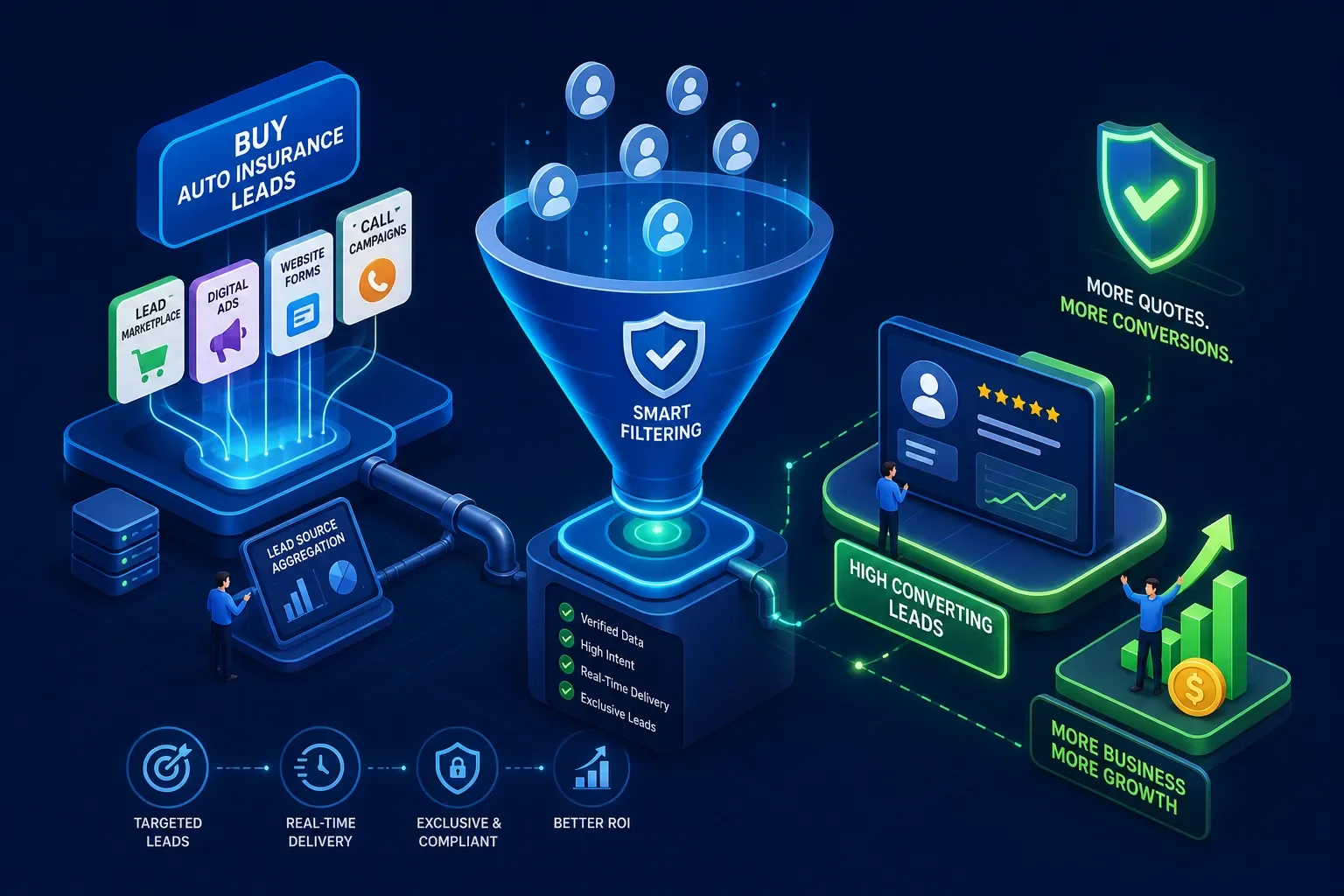
How to Buy Auto Insurance Leads That Actually Conv...
August 9, 2026
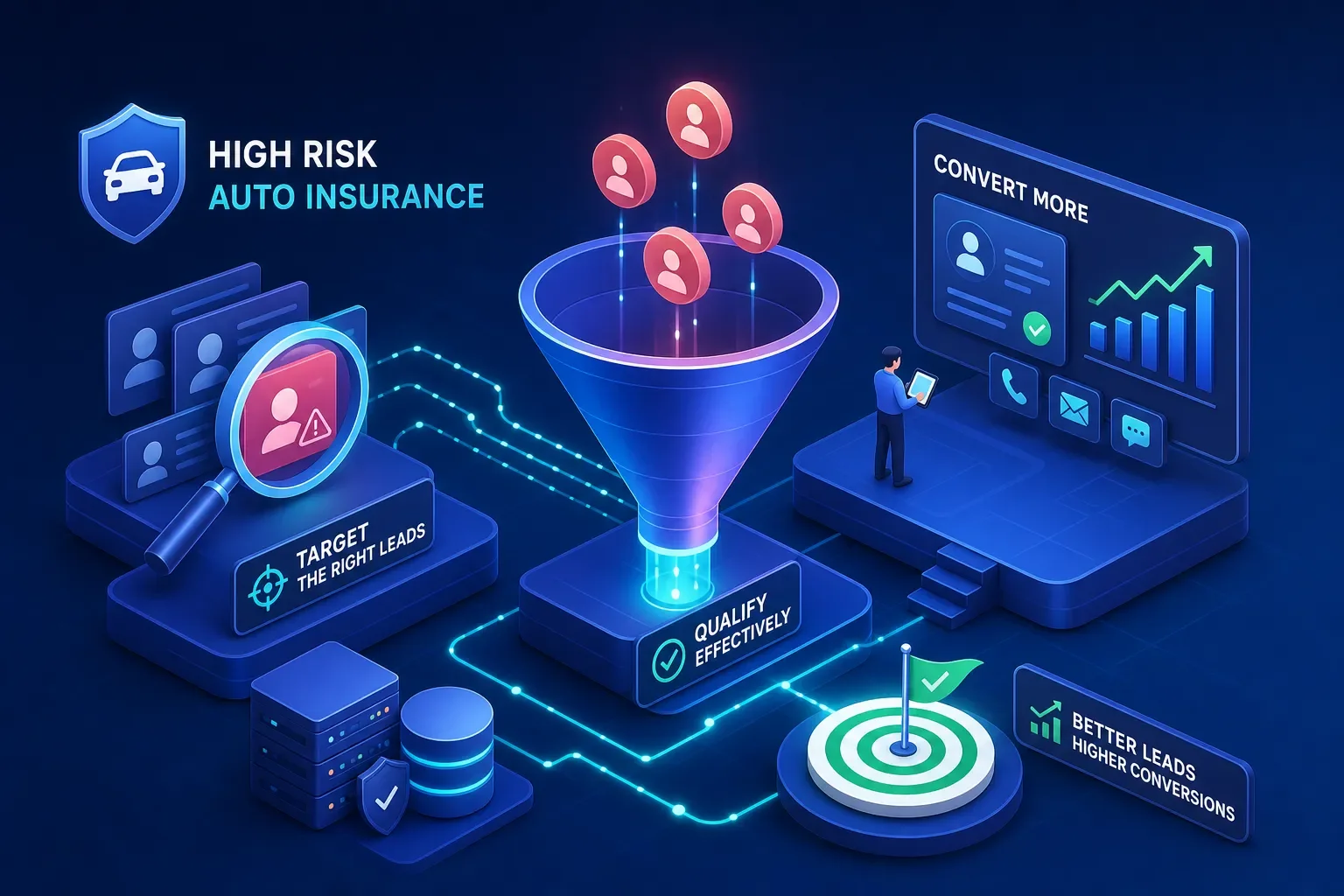
High Risk Auto Insurance Leads: How to Target and ...
August 8, 2026
Related resources
Explore the most relevant pages based on this article.
- Contact Ray Advertising — Ask about pricing, compliance, and launch timelines.
- Lead Generation — High-intent leads with delivery and quality controls.
- Pay Per Call — Qualified inbound calls with tracking and routing.
- Media Buying — Performance media with optimization and attribution.
- Affiliate Network — Vetted publishers and fraud protection.

FAQs
Quick answers related to this article.
We support lead generation, pay per call marketing, media buying, and affiliate network programs.
We use source attribution, quality metrics, and conversion reporting to optimize and scale profitable traffic.
Contact our team or sign up as an advertiser or publisher to begin onboarding.

